In baseball, a pitcher’s performance is not just measured by speed, accuracy, or the number of strikeouts but also by how well they manage their workload over the course of a game. One of the critical statistics to monitor is Pitches by Inning (PBI), which tracks how many pitches a pitcher throws in each inning. This metric provides valuable insights into a pitcher’s efficiency, endurance, and overall health. For players, parents, and coaches, keeping a close eye on PBI is essential for several reasons.
We at Track-A-Pitch recommend pitchers staying in range of 15 (min) to 25 (max) per inning. The goal is for our pitchers to not go over 15.
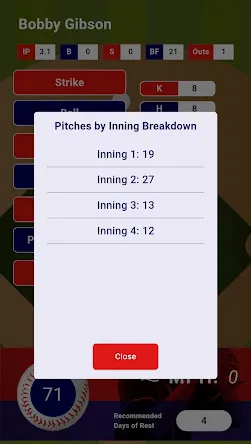
1. Understanding Pitcher Efficiency
PBI allows coaches to assess how effectively a pitcher is getting through innings. A low pitch count per inning typically means the pitcher is keeping batters off the bases and controlling the game. Conversely, a high pitch count can indicate that the pitcher is struggling to close out at-bats, facing longer battles with hitters, or dealing with control issues. Monitoring PBI helps identify areas for improvement, such as refining pitches or better pitch selection strategies.
2. Preventing Injury and Overuse
Pitching is a physically demanding activity, and monitoring PBI is crucial for managing a pitcher’s workload. High pitch counts in individual innings can lead to fatigue, putting unnecessary strain on the pitcher’s arm. Over time, this can increase the risk of injuries like shoulder strains, elbow injuries, or even more severe conditions like Tommy John surgery. By regularly checking PBI, parents and coaches can ensure pitchers are staying within healthy limits and getting the rest they need to avoid overuse.
3. Maximizing Endurance
Pitchers need to maintain their performance throughout the entire game, not just the first few innings. Monitoring how their pitch count fluctuates inning by inning helps assess endurance and stamina. If a pitcher starts strong but their PBI spikes in later innings, it may be a sign that they need to work on conditioning or better manage their pacing throughout the game.
4. Strategic Decision-Making for Coaches
For coaches, PBI provides actionable insights that inform strategic decisions. If a pitcher is consistently throwing a high number of pitches in early innings, it might be time to adjust the game plan, pull the pitcher earlier, or have the bullpen ready. On the other hand, if a pitcher is efficient with a low PBI, the coach may feel more comfortable letting them go deeper into the game, which can be crucial in tight matchups.
5. Building Player Confidence
Young pitchers often focus on strikeouts or throwing as hard as possible, but efficiency is just as important. Monitoring PBI helps pitchers develop a sense of control and teaches them that getting outs quickly is sometimes more valuable than flashy strikeouts. Parents and coaches can use PBI to encourage pitchers to work smarter, not harder, building their confidence as they learn to manage innings efficiently.
6. Long-Term Development
For young pitchers, developing good habits early is key to long-term success. By teaching players, parents, and coaches to monitor PBI, you’re setting the foundation for a career built on sustainability and smart decision-making. This awareness helps pitchers understand their bodies and workload better, promoting healthy development throughout their baseball journey.
Conclusion
Pitches by Inning (PBI) is an invaluable tool for any player, parent, or coach dedicated to improving performance while safeguarding a pitcher’s health. By tracking pitch counts by inning, you gain a clearer picture of the pitcher’s efficiency, endurance, and workload management. This data-driven approach not only enhances on-field decision-making but also helps protect young arms from injury, ensuring they can continue to enjoy the game for years to come.